
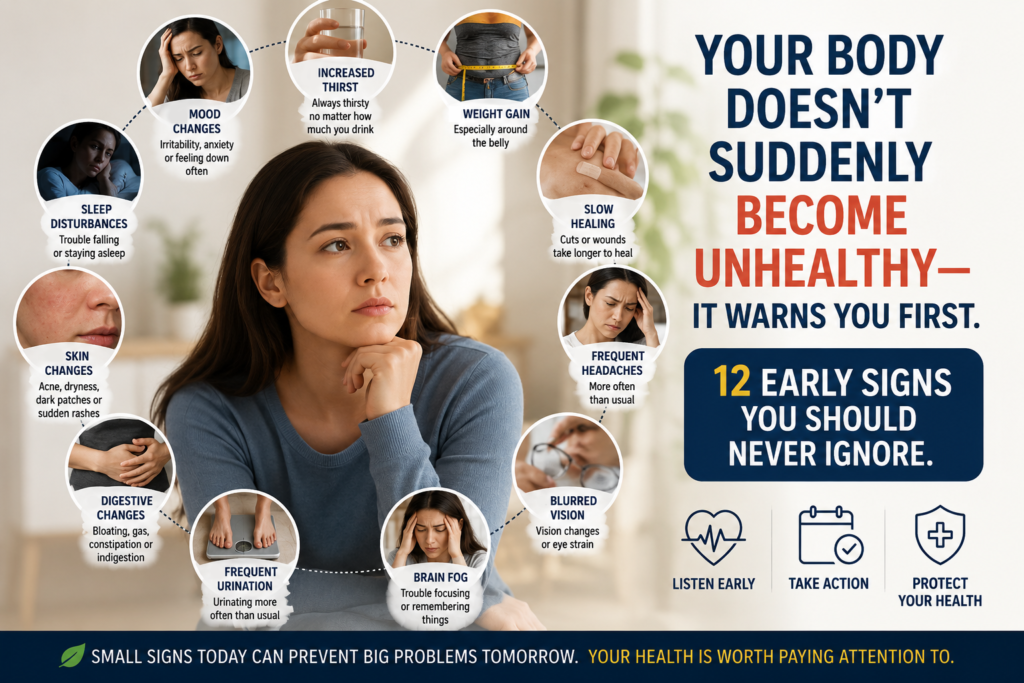
12 Early Signs That Deserve Your Attention
Health rarely changes in a single dramatic moment.
For most people, it changes quietly.
A little less energy than usual.
A pair of trousers that suddenly feels tighter.
An extra glass of water every afternoon.
A headache that seems to visit more often than it used to.
Individually, these changes don’t seem important. They fit easily into a busy life, where stress, lack of sleep, and long workdays often become convenient explanations for almost everything.
That’s exactly why they’re so easy to ignore.
Modern medicine has taught us a great deal about how chronic illnesses develop, and one lesson stands out above the rest: many conditions begin long before a diagnosis is made. Whether it’s Type 2 diabetes, high blood pressure, heart disease, nutritional deficiencies, or hormonal imbalances, the body often shows subtle changes while it is still working hard to keep everything in balance.
Those early changes are not there to create fear.
They’re opportunities.
Recognizing them doesn’t mean assuming something is seriously wrong. It means understanding your own body well enough to notice when something has changed—and knowing when it’s worth paying closer attention.
Not every symptom on this list will apply to every person. Many of them can have perfectly harmless explanations, while others deserve a conversation with a healthcare professional. The goal isn’t self-diagnosis. It’s becoming more aware of patterns that shouldn’t be ignored simply because they’ve become familiar.
Here are twelve signs that deserve your attention.
1. Constant Fatigue That Doesn’t Match Your Lifestyle
Being tired after a demanding week is completely normal.
Feeling exhausted after doing very little isn’t.
One of the earliest warning signs that something may be affecting your health is persistent fatigue that doesn’t improve with rest. You sleep for seven or eight hours, yet still wake up feeling as though the day has already drained your energy before it has even begun.
This type of fatigue often develops gradually. At first, it might simply mean relying on another cup of coffee or skipping an evening walk because you “just don’t have the energy.” Over time, those small compromises become your normal routine.
Several health conditions can contribute to ongoing fatigue, including poor sleep quality, iron deficiency, thyroid disorders, chronic stress, depression, dehydration, vitamin deficiencies, uncontrolled blood sugar, and even heart disease.
Instead of asking whether you’re tired, ask a better question:
Has my usual level of energy changed over the past few months?
That answer is often far more revealing.
What You Can Do
Start with the basics.
Improve your sleep routine, stay hydrated, move your body regularly, and eat balanced meals. If your energy continues to decline despite these changes, arrange a medical check-up rather than assuming it’s simply part of getting older.
2. You’re Thirstier Than You Used to Be
Everyone feels thirsty after exercise or on a hot day.
What’s more important is noticing when your normal level of thirst quietly changes.
Perhaps you’re refilling your water bottle more often than you used to. Maybe your mouth feels dry throughout the day, or you’re waking during the night because you need a drink.
Persistent thirst is one of those symptoms that’s easy to overlook because drinking more water seems like a healthy habit. Yet when it’s accompanied by frequent urination, unexplained tiredness, or blurred vision, it deserves closer attention.
High blood sugar is one possible cause, but it isn’t the only one. Dehydration, kidney problems, certain medications, excessive caffeine, and some hormonal conditions can all increase thirst.
The body loses water for many different reasons. The important thing is understanding why it keeps asking for more.
What You Can Do
Pay attention to patterns instead of isolated days.
If you’ve noticed a clear change in your thirst that continues for several weeks, especially alongside other symptoms, speak with your healthcare provider.
3. Your Waistline Is Expanding Faster Than the Rest of You
Weight naturally changes throughout life.
What deserves attention is where those changes are happening.
An increasing waist circumference is more than a clothing issue. Excess fat around the abdomen is closely linked with insulin resistance, cardiovascular disease, fatty liver disease, and metabolic syndrome.
Unlike fat stored elsewhere in the body, abdominal fat is metabolically active. It influences hormones, promotes inflammation, and makes it more difficult for the body to regulate blood sugar efficiently.
The scale may only show a small increase, but your waist measurement can tell a very different story.
Carrying excess weight around the abdomen can be linked with metabolic health. If you’ve heard claims about certain nutrients helping with weight management, read our evidence-based article “Can Magnesium Reduce Belly Fat? The Truth Behind This Trending Weight-Loss Mineral.”
What You Can Do
Rather than chasing quick weight-loss trends, focus on habits that improve metabolic health:
- Walk regularly.
- Build muscle through strength training.
- Eat more vegetables and lean protein.
- Reduce highly processed foods.
- Prioritize consistent sleep.
Small changes repeated consistently almost always outperform extreme diets that last only a few weeks.
4. Cuts, Scratches, or Bruises Take Longer to Heal
The human body is remarkably efficient at repairing itself.
When that process begins slowing down without an obvious reason, it’s worth paying attention.
Healing depends on healthy circulation, good nutrition, adequate oxygen delivery, and a well-functioning immune system. If one or more of those systems isn’t working as efficiently as it should, even a small cut may take noticeably longer to recover.
Poor blood sugar control is one possible explanation, but so are smoking, nutritional deficiencies, poor circulation, certain medications, and immune-related conditions.
One slow-healing wound doesn’t necessarily indicate a serious problem.
A repeated pattern is far more meaningful than a single event.
What You Can Do
Support healing by eating enough protein, staying active, avoiding smoking, and keeping wounds clean.
If a wound becomes increasingly painful, swollen, infected, or refuses to heal over several weeks, seek medical advice promptly.
5. Brain Fog Is Becoming More Than an Occasional Bad Day
Everyone loses their train of thought from time to time. A busy week, a poor night’s sleep, or juggling too many responsibilities can leave anyone feeling mentally drained.
The concern begins when those moments stop being occasional and become part of everyday life.
Perhaps you’re forgetting appointments that you would normally remember. You find yourself rereading the same paragraph several times without taking anything in. Conversations require more effort to follow, and simple decisions suddenly feel mentally exhausting.
This experience—often described as “brain fog”—isn’t a medical diagnosis itself. Rather, it’s a symptom that can point toward a variety of underlying issues.
Poor sleep quality, chronic stress, dehydration, vitamin B12 deficiency, iron deficiency, thyroid disorders, uncontrolled blood sugar, certain medications, and even prolonged inactivity can all affect how clearly your brain functions.
One overlooked contributor is blood sugar instability. Your brain depends heavily on a steady supply of glucose for energy. When blood sugar rises and falls dramatically throughout the day, concentration and mental clarity can suffer.
It’s easy to dismiss brain fog as “just getting older” or “having too much on your mind.” Yet many people discover that improving their sleep, nutrition, hydration, or treating an underlying medical condition brings remarkable improvements in focus.
When should you pay attention?
If brain fog continues for several weeks, begins affecting your work, driving, conversations, or daily responsibilities, or is accompanied by symptoms such as dizziness, severe headaches, confusion, or memory changes, it’s time to seek medical advice rather than assuming it will pass on its own.
A healthier habit
Support your brain the same way you support the rest of your body. Stay hydrated, prioritize quality sleep, eat balanced meals with enough protein and healthy fats, and take regular breaks from prolonged screen time. Sometimes the smallest daily habits make the biggest difference in mental clarity.
6. Your Vision Isn’t as Clear as It Used to Be
Most of us blame blurry vision on tired eyes or spending too much time looking at screens.
Sometimes that’s exactly what it is.
But when blurred vision appears repeatedly, comes and goes without explanation, or is accompanied by other physical changes, it deserves closer attention.
Vision can change for many reasons. Dehydration, eye strain, aging, and needing a new glasses prescription are all common explanations. However, fluctuating vision may also occur when blood sugar levels are poorly controlled. High glucose levels can temporarily alter the shape of the eye’s lens, causing vision to become blurry until blood sugar stabilizes.
High blood pressure, cataracts, glaucoma, and other eye conditions may also affect vision, often without causing pain in their early stages.
Your eyes can reveal more about your overall health than many people realize. In fact, routine eye examinations sometimes identify health problems before other symptoms become obvious.
Don’t ignore this if…
Your blurred vision occurs frequently, affects one eye more than the other, is accompanied by headaches, dizziness, increased thirst, or develops suddenly.
Sudden vision loss or severe eye pain should always be treated as a medical emergency.
A healthier habit
Protect your eyesight by scheduling regular eye examinations, managing chronic conditions such as diabetes or high blood pressure, limiting excessive screen time, and giving your eyes regular breaks during the day.
7. You Feel Hungry Again Soon After Eating
Finishing a meal should leave you feeling comfortably satisfied for several hours.
If you’re constantly searching for another snack shortly after eating, your body may be trying to tell you something.
Persistent hunger isn’t always about eating too little. Sometimes it’s about what you’re eating—or how efficiently your body is using the energy you provide.
Meals high in refined carbohydrates and added sugars can cause blood sugar to rise quickly and then fall just as rapidly. That drop may trigger hunger even when you’ve recently eaten enough calories.
Other possible causes include inadequate protein or fiber intake, poor sleep, chronic stress, increased physical activity, certain medications, hormonal changes, and conditions such as insulin resistance or an overactive thyroid.
Rather than blaming yourself for “having no willpower,” consider whether your meals are truly nourishing your body.
A plate built around vegetables, lean protein, whole grains, healthy fats, and fiber tends to keep you satisfied far longer than one built mainly from processed foods.
Pay attention if…
You experience constant hunger alongside excessive thirst, unexplained weight changes, fatigue, or frequent urination. Together, these symptoms may warrant a discussion with your healthcare provider.
A healthier habit
Before reaching for another snack, ask yourself whether your last meal contained enough protein, fiber, and healthy fats. Improving meal quality often reduces unnecessary cravings far more effectively than relying on strict dieting.
8. You’re Sleeping Through the Night Less Than You Used To
A restless night every now and then is part of life.
What’s more important is noticing when interrupted sleep becomes your new normal.
Perhaps you’re waking several times during the night without knowing why. Maybe you’re regularly getting up to use the bathroom, waking feeling thirsty, or finding it difficult to fall back asleep.
Sleep disruption doesn’t just leave you tired the next morning—it affects nearly every system in your body. Poor sleep has been linked with reduced concentration, increased appetite, weakened immunity, higher stress hormones, elevated blood pressure, insulin resistance, and a greater risk of developing chronic health conditions over time.
The relationship also works in reverse.
Conditions such as sleep apnea, poorly controlled blood sugar, anxiety, acid reflux, chronic pain, and hormonal changes can all interfere with restful sleep.
Many people focus on treating daytime fatigue without asking whether their sleep quality is the real issue.
Be especially mindful when…
You snore loudly, stop breathing during sleep (as noticed by someone else), wake gasping for air, experience persistent daytime sleepiness despite spending enough hours in bed, or regularly wake needing to urinate several times each night.
These are signs worth discussing with a healthcare professional.
A healthier habit
Aim for a consistent bedtime, avoid heavy meals and excessive caffeine late in the evening, reduce screen exposure before bed, and create a calm, dark sleeping environment. Good sleep isn’t a luxury—it’s one of the foundations of long-term health.
9. Your Skin Is Changing in Ways You Didn’t Expect
Your skin does far more than protect your body from the outside world. It’s often one of the first places where internal health changes become visible.
Most skin changes are harmless and simply part of aging. However, some deserve a closer look—especially if they appear suddenly or continue to progress.
Perhaps you’ve noticed a patch of darker, velvety skin around your neck, under your arms, or near your groin. Maybe your skin has become unusually dry despite using moisturizer, or minor cuts seem to leave marks that linger for months.
These changes can have many explanations. Dry skin may simply reflect dehydration or seasonal weather, while persistent rashes could relate to allergies or eczema. But in some cases, skin changes are linked to underlying health conditions such as insulin resistance, nutritional deficiencies, thyroid disorders, or poor circulation.
One example is acanthosis nigricans—a condition that causes darker, thicker patches of skin, often around the neck or armpits. It is commonly associated with insulin resistance, although it can have other causes as well.
Your skin doesn’t diagnose disease.
It simply offers clues that may deserve further investigation when they appear alongside other symptoms.
Don’t ignore this if…
Darkened skin develops rapidly around the neck or armpits.
Cuts heal unusually slowly.
Itching becomes persistent without an obvious cause.
Skin infections keep returning.
A mole changes in size, color, or shape.
These changes don’t always indicate a serious condition, but they shouldn’t be dismissed without evaluation.
A healthier habit
Keep your skin healthy by staying hydrated, eating a nutrient-rich diet, protecting it from excessive sun exposure, and paying attention to new or changing spots. If something continues to change despite good skin care, arrange a medical assessment rather than trying to treat it yourself.
10. Your Digestive System Has Quietly Changed
Digestive health isn’t something most people think about—until something feels different.
Perhaps you’re experiencing frequent bloating after meals, constipation that has become more common, persistent heartburn, or bowel habits that have gradually changed over several months.
Occasional digestive discomfort happens to everyone.
The concern is when those changes become predictable rather than occasional.
Your digestive system is influenced by far more than food alone. Stress, medications, infections, food intolerances, changes in gut bacteria, thyroid disorders, diabetes, and inflammatory bowel conditions can all affect digestion.
Ignoring these symptoms because they’re not painful can delay identifying an underlying issue.
Equally important, digestive symptoms that appear together with unexplained weight loss, persistent fatigue, or anemia deserve prompt medical attention.
Pay attention when…
Symptoms continue for more than a few weeks.
You notice blood in your stool.
You lose weight without trying.
Persistent abdominal pain wakes you from sleep.
You experience difficulty swallowing.
These are situations where self-treatment isn’t enough.
A healthier habit
Support your digestive system by eating slowly, increasing dietary fiber gradually, drinking enough water, staying physically active, and limiting highly processed foods. If symptoms persist, avoid guessing the cause and seek professional advice.
11. You’re Catching Every Cold That Comes Around
Everyone gets sick occasionally.
But if it feels as though every virus finds you while everyone else recovers quickly, it’s worth considering whether something else is affecting your immune system.
A weakened immune response doesn’t necessarily mean you have a serious illness. Poor sleep, chronic stress, inadequate nutrition, smoking, excessive alcohol intake, and certain medications can all reduce your body’s ability to fight infections.
Some medical conditions—including diabetes—may also increase the risk of frequent infections when blood sugar remains poorly controlled.
Recurring infections don’t always appear dramatic.
They may show up as repeated colds, frequent sinus infections, urinary tract infections, slow-healing skin infections, or recurring fungal infections.
Rather than focusing only on treating each infection individually, it’s important to ask why they’re happening so often.
Consider speaking with your healthcare provider if…
You seem to recover much more slowly than before.
Infections become more frequent than they used to be.
Wounds repeatedly become infected.
Illness is accompanied by unexplained weight loss or persistent fatigue.
Looking for patterns over time is often more helpful than focusing on a single illness.
A healthier habit
Support your immune system through adequate sleep, regular physical activity, balanced nutrition, stress management, recommended vaccinations, and avoiding smoking. Strong immunity is built through consistent daily habits—not quick supplements promising miracle results.
12. You No Longer Feel Like Yourself
Not every warning sign appears on a blood test.
Sometimes the biggest change is simply how you feel.
You may notice that your patience is shorter than it used to be. Small tasks feel overwhelming. Motivation disappears. You find yourself withdrawing from activities you once enjoyed, or feeling unusually anxious without understanding why.
Mental and physical health are deeply connected.
Chronic inflammation, nutritional deficiencies, poor sleep, hormonal changes, persistent stress, thyroid disorders, chronic pain, and uncontrolled medical conditions can all influence mood and emotional well-being.
That doesn’t mean every emotional change has a physical cause.
Nor does it mean every physical illness causes depression or anxiety.
What matters is recognizing when a lasting change in your emotional health deserves the same attention you would give persistent physical symptoms.
Looking after your mental well-being isn’t separate from looking after your physical health.
They’re two parts of the same picture.
Reach out for support if…
Low mood continues for several weeks.
Anxiety begins interfering with daily life.
You lose interest in activities you normally enjoy.
Friends or family notice significant personality changes.
Asking for help is a sign of taking your health seriously—not a sign of weakness.
A healthier habit
Protect your emotional health by making time for meaningful relationships, regular movement, restorative sleep, stress-management techniques, and open conversations with people you trust. If emotional changes persist, don’t hesitate to seek support from a qualified healthcare professional.
If low energy has become part of your daily life, you may also enjoy our guide “10 Daily Habits to Instantly Boost Your Energy, Mood, and Focus,” where we share practical routines that help support both physical and mental well-being.
The Bottom Line

Your body doesn’t suddenly become unhealthy overnight.
Long before many illnesses are diagnosed, small changes often begin to appear. They may seem unrelated at first—a little more fatigue, interrupted sleep, changes in appetite, slower healing, or difficulty concentrating.
On their own, these symptoms don’t necessarily point to a serious health condition. But when they become persistent, occur together, or represent a clear change from your normal health, they’re worth paying attention to.
Listening to your body isn’t about becoming anxious over every symptom. It’s about noticing patterns, making healthier choices, and seeking medical advice when something doesn’t feel right.
Many chronic conditions—including Type 2 diabetes, high blood pressure, heart disease, and nutritional deficiencies—can often be managed more effectively when they’re recognized early.
If you’re particularly concerned about blood sugar or have been told you have prediabetes, you may also find our in-depth guide “Beyond the Sugar Spike: How New Science and Integrative Medicine Are Resetting Diabetes Care” helpful for understanding current approaches to diabetes management.
The small decisions you make today—choosing a balanced meal, going for a walk, getting enough sleep, managing stress, or scheduling a health check-up—can have a lasting impact on your future well-being.
Your body works hard for you every day. Paying attention to its early signals is one of the most valuable investments you can make in your long-term health.