Have you ever found yourself with a little free time and wondered what to do with it, only to end up doing the same things you always do?
Perhaps you scroll through your phone, watch something, browse online shops or move from one familiar activity to another. You want to try something different, but when you actually think about taking up a hobby, nothing seems quite right.
Painting sounds lovely, but you wonder whether you have the patience. Learning an instrument sounds exciting, but perhaps you don’t want another commitment. Gardening might be enjoyable, but you don’t have the space. And the idea of joining a class can feel like a bigger step than you expected.
Finding a hobby as an adult can be surprisingly difficult. Not necessarily because there aren’t enough things to do, but because we often approach the idea with too many expectations.
We want to find something interesting, something we’re naturally good at, something worth spending money on, or perhaps something that will eventually lead to a useful skill.
But what if a hobby doesn’t need to become anything more?
It doesn’t have to make money, improve your career, impress anyone or even produce something beautiful. It can simply be an activity you look forward to doing.
Sometimes, the best place to start isn’t by asking, “What hobby should I try?” but by asking, “What would I enjoy having a little more of in my life?”
Why Finding a Hobby as an Adult Can Feel So Difficult
When we are younger, trying something new can happen quite naturally. We experiment, make things, join activities and sometimes abandon them without giving it much thought.
As adults, we can become more cautious.
We think about the cost, the time involved, whether we will be good at it and whether we will actually continue. Even a simple activity can start to feel like another responsibility.
There is also a difference between liking the idea of a hobby and enjoying the experience of doing it.
You might love looking at beautiful pottery, for example, but that doesn’t necessarily mean you will enjoy working with clay. You might admire people who play musical instruments without wanting to spend your evenings practising one.
That’s why choosing a hobby based only on how attractive it looks can be misleading.
It helps to think about what you would like the activity to bring into your everyday life. Perhaps you want to make something with your hands, challenge yourself, spend more time outdoors, meet people or simply have an interest that belongs to you. Research on hobbies and well-being has examined themes such as enjoyment, personal fulfilment, skill development and social connection. These are useful starting points when considering what might make an activity meaningful to you.
10 Interesting Hobbies to Try as an Adult
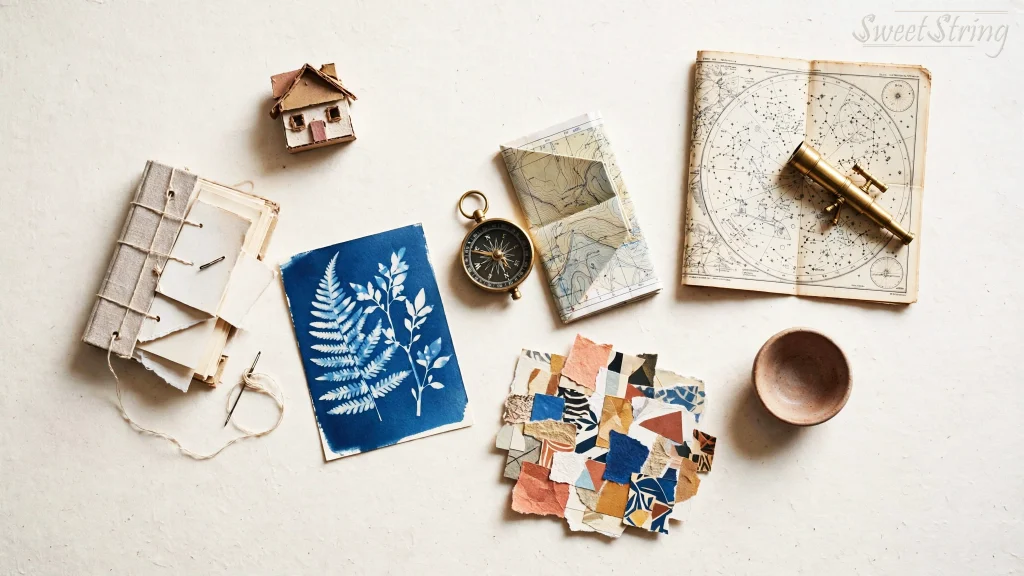
Instead of repeating the usual suggestions, here are ten activities that offer something a little different. Some are creative, some involve learning, and others turn ordinary free time into a small adventure.
You don’t need to be naturally talented at any of them. Being curious is enough to begin.
1. Bookbinding: Make Your Own Notebooks and Little Books
Have you ever picked up a beautiful notebook and wished you could make something just like it?
Bookbinding is the art of putting pages together to create a handmade book. You can experiment with different paper, covers, thread, colours and sizes to make journals, sketchbooks, notebooks or small collections of writing.
What makes this hobby particularly appealing is that the result is something you can actually use. Instead of buying another notebook, you can create one that reflects your own taste.
You don’t need a professional workshop to begin. Start with a small project using paper, cardboard, a ruler, thread and basic bookbinding tools. There are beginner tutorials that demonstrate simple stitched bindings.
Why you might enjoy it: If you like stationery, paper crafts and working carefully with your hands, bookbinding gives you a lovely combination of creativity and practical skill.
2. Geocaching: Turn an Ordinary Walk into a Treasure Hunt
Imagine going for a walk with a little mystery to solve.
Geocaching is an outdoor activity in which people use GPS coordinates to find hidden containers, known as geocaches. These are placed by other participants and can be found in parks, public spaces and other permitted locations.
Rather than following a familiar walking route without much thought, you have a destination to look for. Some caches are easy to find, while others require a little more observation and problem-solving.
You can start by checking the Geocaching website or app for publicly listed caches in your area. Read the descriptions, check the difficulty level and follow local rules. Remember to respect private property and the environment.
Why you might enjoy it: It adds curiosity and a sense of adventure to an activity you might already do. It can also be enjoyed with a friend or family member.
3. Miniature World Building: Create a World in Small Detail
Some people enjoy working on a large canvas. Others find something fascinating about creating an entire little world that fits on a table.

Miniature world building involves making small-scale scenes such as tiny rooms, cafés, bookshops, gardens, streets or imaginary landscapes.
You might create a miniature reading corner with a little bookshelf, a tiny chair and a window overlooking a garden. Or you could build a small shop with carefully arranged objects and decorative details.
The process can involve cutting, assembling, painting and arranging. You can use ready-made miniature kits or build scenes from simple materials.
Start with one small setting rather than attempting an elaborate project. Even a miniature bookshelf or a tiny garden can be a satisfying first creation.
Why you might enjoy it: This hobby suits people who enjoy details, design and imaginative projects. It also offers the pleasure of watching an idea gradually take shape.
4. Amateur Astronomy: Get to Know the Night Sky
When was the last time you looked up at the night sky and tried to identify what you were seeing?
Amateur astronomy is an interesting hobby for anyone who enjoys learning about the universe. It can begin with something as simple as observing the Moon, recognising a few constellations and following the movement of visible planets. You don’t need to buy an expensive telescope immediately. A clear view of the sky, a little patience and a reliable star map or astronomy app can help you get started.
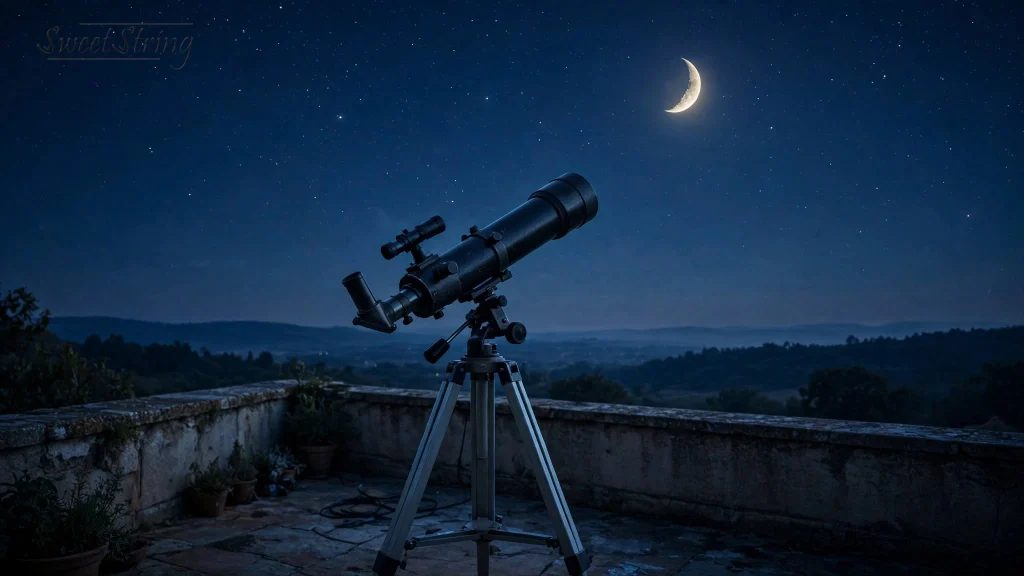
You could choose one evening each week to observe the sky and keep a small notebook of what you notice. Record the Moon’s appearance, the constellations you recognise or any interesting celestial events. Over time, you may decide to join an astronomy group or invest in binoculars or a telescope.
Why you might enjoy it: It gives you something new to learn and encourages you to look at the familiar world from a much wider perspective.
5. Restoring Old Objects: Give Something a Second Life
There is something satisfying about looking at an old object and imagining what it could become with a little care.
Restoration involves repairing, cleaning or improving items that have become worn or neglected. You could begin with a wooden picture frame, a small box, an old decorative item or a simple piece of furniture.
The appeal isn’t necessarily making something look brand new. Sometimes, preserving its original character is part of the charm.
A small project might involve cleaning an object, sanding a suitable wooden surface, repairing a loose part or applying a fresh finish. Choose projects that match your skill level, and use appropriate safety precautions, especially when sanding, handling old paint or working with tools.
Why you might enjoy it: It offers a visible sense of progress. You start with something that needs attention and gradually turn it into something useful or beautiful again.
6. Collage and Zine-Making: Tell Stories Without Needing to Draw
Not everyone feels comfortable drawing or painting, but that doesn’t mean creative hobbies are out of reach.
Collage is a way of creating artwork by combining different materials, such as photographs, magazine pages, printed illustrations, paper textures, handwritten notes and decorative pieces.
You can arrange these elements to create a mood board, a visual diary or a collection of images around a particular theme. A related activity is zine-making. A zine is a small, independently created publication. It might contain illustrations, personal writing, photographs, lists, thoughts or a mixture of everything.
Imagine creating a little booklet about your favourite places, memorable moments, interesting objects or things that inspire you. You can begin with old magazines, paper, scissors and glue. There is no need to buy expensive art supplies.
Why you might enjoy it: It allows you to express your personality without needing traditional artistic skills. There are no strict rules about what the finished piece should look like.
7. Improv Theatre: Discover the Joy of Making Things Up
If you enjoy stories, humour and unexpected situations, improv theatre might be worth considering. Improvisational theatre involves creating scenes, characters and conversations without a prepared script. Participants respond to one another and build a scene as it develops.
You don’t have to be a professional performer or naturally confident to try it. Beginner workshops often use simple games and exercises to introduce the idea.
It can be particularly interesting for people who spend most of their time in structured routines and would enjoy an activity where there is room for spontaneity. Look for a beginner-friendly community theatre group or improv workshop. You can observe a session first if you’re unsure about participating.
Why you might enjoy it: It combines creativity, playfulness and social interaction. It also gives you an opportunity to meet people through a shared activity rather than relying entirely on conversation.
8. Cyanotype Printing: Create Artwork Using Sunlight
This is one of the more unusual creative hobbies, and the results can be beautiful.
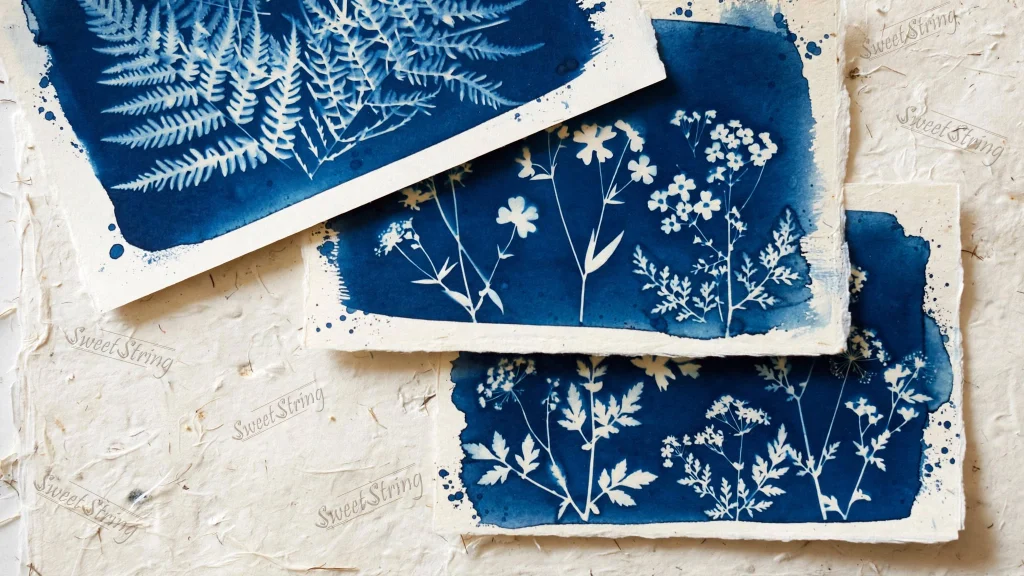
Cyanotype is an alternative photographic printing process that produces distinctive blue-and-white images. Objects such as leaves, flowers, feathers and paper shapes can be placed on prepared light-sensitive material and exposed to sunlight.
When the material is processed according to the kit’s instructions, the covered areas and exposed areas create a striking image. You can use this technique to make botanical prints, decorative cards, bookmarks or artwork for your home. Beginner cyanotype kits are available, so you don’t necessarily need to source and prepare the chemicals yourself. Follow the product’s safety instructions and protect your skin and eyes as directed.
Why you might enjoy it: It combines art, experimentation and a little surprise. You arrange the objects, expose the material and wait to see how your composition turns out.
9. Citizen Science: Turn Your Curiosity into a Contribution
What if a hobby could also help researchers learn something about the natural world?
Citizen science allows members of the public to contribute observations or information to scientific projects. Depending on the project, participants may record birds, identify plants, photograph insects or help classify images.
For example, you might take an interest in the birds that visit your garden or the trees you notice during your walks. You can learn to identify them and submit observations through an appropriate project. Platforms such as iNaturalist and eBird offer ways to record observations, although the projects and their availability vary by location.
You don’t need to be a scientist to begin. Start with something you can observe locally, learn how to identify it and follow the project’s guidance for submitting accurate information.
Why you might enjoy it: It combines learning, observation and a sense of contribution. Your interest becomes part of something larger than your own collection of hobbies.
10. Pottery and Ceramics: Make Something with Your Hands
Pottery is often associated with beautiful finished objects, but the process itself can be just as interesting.
Working with clay gives you the opportunity to shape, press, smooth and transform a material with your hands. You might make a small bowl, a decorative dish, a plant pot or a simple cup.
You can begin with a beginner pottery class, where the equipment and guidance are provided. If you prefer to experiment at home, air-dry clay is another accessible starting point for decorative projects, although it is not the same as kiln-fired ceramics.
Don’t expect your first creation to look perfect. Part of learning is discovering how the material responds to your hands.
Why you might enjoy it: It offers a hands-on creative experience and the satisfaction of making an object from a simple piece of clay.
How to Choose a Hobby That Actually Fits Your Life
After reading through these ideas, you might already have one or two activities in mind. Or perhaps you’re still unsure.
Instead of choosing the most impressive-sounding option, consider what you would genuinely enjoy doing.
If you want to make something: Try bookbinding, miniature building, collage or cyanotype printing.
If you want a new challenge: Consider astronomy, pottery or learning a practical restoration skill.
If you want to spend more time outdoors: Geocaching, bird observation and citizen science are interesting starting points.
If you want to meet people: Look into improv theatre, pottery classes or local activity groups.
If you want something you can do at home: Bookbinding, collage and miniature building can be adapted to a small space.
Your practical circumstances matter, too. Consider the cost of supplies, the space available, how much time you can comfortably give the activity and whether you prefer learning alone or with others.
A hobby should fit into your life rather than become another source of pressure.
Give Yourself Four Attempts Before You Decide
One thing worth remembering is that you don’t have to know whether you’ll love a hobby before you try it.
The first experience may feel unfamiliar. You might struggle with a technique, find the instructions confusing or discover that the activity is more complicated than it looked.
That doesn’t automatically mean it isn’t for you.
Instead of making a decision after one attempt, give yourself a few opportunities to experience the activity. Try a beginner tutorial, borrow some basic supplies or attend an introductory class before investing in expensive equipment.
You could even make a small personal challenge:
- First attempt: Learn what the activity involves.
- Second attempt: Try a simple beginner project.
- Third attempt: Notice which parts you enjoyed and which you didn’t.
- Fourth attempt: Decide whether you’d like to continue, change your approach or try something else.
This isn’t a rule you must follow. Some activities won’t appeal to you, even after several attempts, and that’s perfectly fine.
The purpose is to give yourself enough experience to make a decision without turning every new interest into a commitment.
A Hobby Doesn’t Have to Become Anything More
Perhaps the most important thing about finding a hobby as an adult is allowing yourself to enjoy something without needing to justify it.
Not everything needs to be productive. Not every new skill needs to become a business. And not every creative activity needs to result in something worth displaying.
You might spend an afternoon making a tiny room that nobody else will ever see. You might learn to recognise a few constellations, make a handmade notebook or spend an hour observing birds.
These activities may not change your life in a dramatic way, but they can give your ordinary days something different to look forward to.
And if you try something and decide it isn’t for you, that experience still tells you a little more about what you enjoy.
You don’t have to find your lifelong passion this weekend. You only need to find one thing that makes you curious enough to begin.
So, which of these hobbies would you be most interested in trying? Or is there something you’ve always wanted to learn but never quite got around to?